WelcomeXinxiang Chengde Global Trade Co., LTD.website!
Tel:
Your location:HOME > Product Center > Co2 recovery >
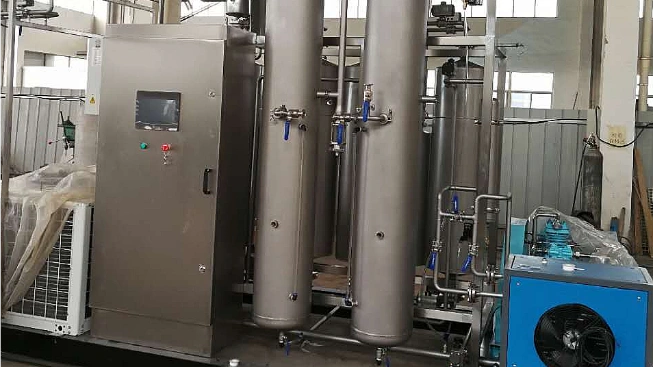
1.Pretreatment System:
Scrubber: Removes impurities such as dust, trace alcohols, and ammonia from the exhaust gas to prevent them from contaminating the subsequent absorbent.
Cooler: Cools the exhaust gas to the optimal temperature required by the absorbent (typically 40-60°C).
2.CO₂ Absorption System:
Absorber: One of the core components. Pretreated feed gas enters the tower from the bottom and countercurrently contacts the lean amine solution (regenerated absorbent) sprayed from the top. CO₂ is chemically absorbed by the amine solution, and the purified gas (decarbonized gas) is discharged from the top.
Absorber Intercooler: The absorption reaction is exothermic, requiring intercooling to maintain the optimal absorption temperature.
3.Solution Regeneration System:
Rich Liquid Pump and Rich/Lean Liquid Heat Exchanger: The rich amine solution, which has absorbed CO₂, is pressurized by a pump and then exchanges heat with the high-temperature lean amine solution, recovering heat and improving energy efficiency. Regeneration Tower (Desorption Tower): The second core piece of equipment. The rich amine liquid after heat exchange enters the upper portion of the regeneration tower. Heated by the hot steam provided by the reboiler at the bottom of the tower, a reverse reaction occurs, desorbing high-purity CO₂ gas. The regenerated lean amine liquid flows out of the tower bottom.
Reboiler: Typically uses low-pressure steam to provide the heat required for regeneration and is the primary energy consumer in the unit.
4.CO₂ Purification and Compression System:
Condenser and Separator: The CO₂ gas exiting the top of the regeneration tower contains water vapor and possible entrained amine liquid. After cooling and condensation, the liquid water is separated, resulting in dry CO₂ gas.
Compressor: Compresses the CO₂ gas to the required pressure.
Liquefaction Unit (Optional): If a liquid CO₂ product is desired, it undergoes drying, liquefaction (refrigeration), and storage systems.
5.Auxiliary Systems:
Solvent Purification System: Removes heat-stable salts and degradation products generated during operation, maintaining absorbent activity and mitigating corrosion.
Control system: DCS or PLC centralized control system to ensure safe, stable and efficient operation of the device.
is a complex systems engineering project. It transforms greenhouse gas CO₂ into valuable resources through physical and chemical methods such as absorption, adsorption, and cryogenics. It is a key technology for achieving a green, low-carbon transition in the chemical industry and the development of a circular economy. The choice of technology path requires a comprehensive assessment based on specific gas source conditions, product requirements, and economic feasibility.
NEWS CENTER
[ 2026-01-10 ]
[ 2026-01-10 ]
[ 2025-10-11 ]
[ 2025-09-10 ]

phone:+86 18625958190
Email:cncdtank@gmail.com
Address:Fengquan Industrial Zone, Xinxiang City, China

QR Code
Hotline
Use WeChat "Scan" to add friends for consultation