From steel smelting to chip manufacturing, and from medical emergencies to new energy batteries, high-purity gases (such as oxygen, nitrogen, and argon) have become the “blood” of modern industry. Air separation equipment converts air into precisely usable resources through cryogenic processes, membrane separation, or pressure swing adsorption (PSA/VPSA) technology. Its technical level is directly linked to the energy efficiency and competitiveness of downstream industries.
1. Panoramic view of the technology roadmap: How to select the optimal solution for different scenarios?
1. Cryogenic distillation method (mainstream process)
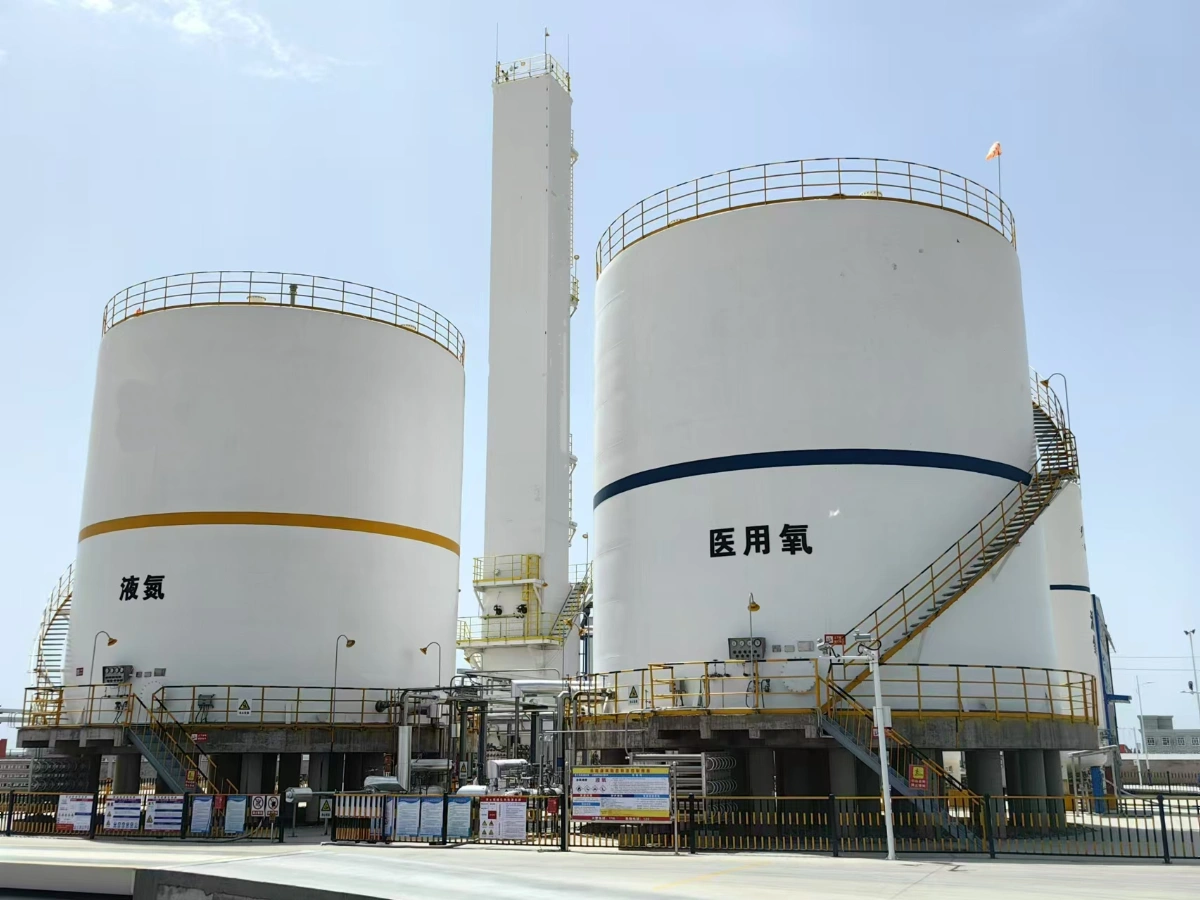
- Principle: Compression-cooling-liquefaction-distillation, with component separation carried out at -196°C.
- Advantages: Extremely high purity (oxygen ≥ 99.6%, nitrogen ≥ 99.999%), large-scale production and low cost.
- Applicable to: 10,000-ton-level gas demand scenarios such as steel, chemical industry, and electronic gas (which requires ultra-pure nitrogen).
2. Pressure swing adsorption (PSA/VPSA)
- Principle: Selective adsorption by molecular sieves, with periodic switching of gas output.
- Advantages: Flexible start-up and shutdown, low energy consumption, and high degree of automation.
- Applicable to: Small and medium-sized gas consumption scenarios (such as medicine, glass manufacturing, and sewage treatment).
3. Membrane separation technology
- Principle: Utilize the difference in permeation rates of gases through polymer membranes to achieve separation.
- Advantages: No moving parts, easy maintenance, compact and lightweight equipment.
- Applicable to: Low-purity nitrogen demand scenarios (such as food preservation and tire nitrogen filling).
2. Energy efficiency revolution: The “green transition” of air separation equipment
- High-efficiency compression system: Adopting a three-stage centrifugal compressor + air bearing, reducing energy consumption by 18% compared to traditional systems.
- Intelligent variable load control: Adjust output in real time according to gas demand to avoid the “big horse pulling a small cart” inefficiency.
- Waste heat recovery design: Convert compression heat into factory heating or process hot water, improving overall energy efficiency by 12%.
3. Emerging market driving forces
1. The explosion of new energy:
- Lithium battery manufacturing requires ultra-pure nitrogen for protecting electrode workshops (dew point ≤ -70°C).
- Photovoltaic polysilicon refining relies on high-purity oxygen + argon as protective gases.
2. High-end manufacturing upgrade:
- Semiconductor lithography gases and etching gases require rare gases such as neon, krypton, and xenon.
- Aerospace liquid oxygen-kerosene engine testing requires a supply of hundreds of tons of liquid oxygen.
3. Deepening of medical and food sectors:
- Hospitals’ central oxygen supply systems are being upgraded to “intelligent monitoring”.
- Food nitrogen preservation has expanded from canned products to the entire cold chain packaging chain.
Air separation equipment is shifting from “general infrastructure” to “industry customized solutions.” Only companies that master core energy efficiency technologies and have in-depth application scenarios can lead this “invisible gas” industrial transformation.